
2026-09-17 · Cody Christensen
Identifying and Managing Ant Trails Around Rock Springs Yards in Spring
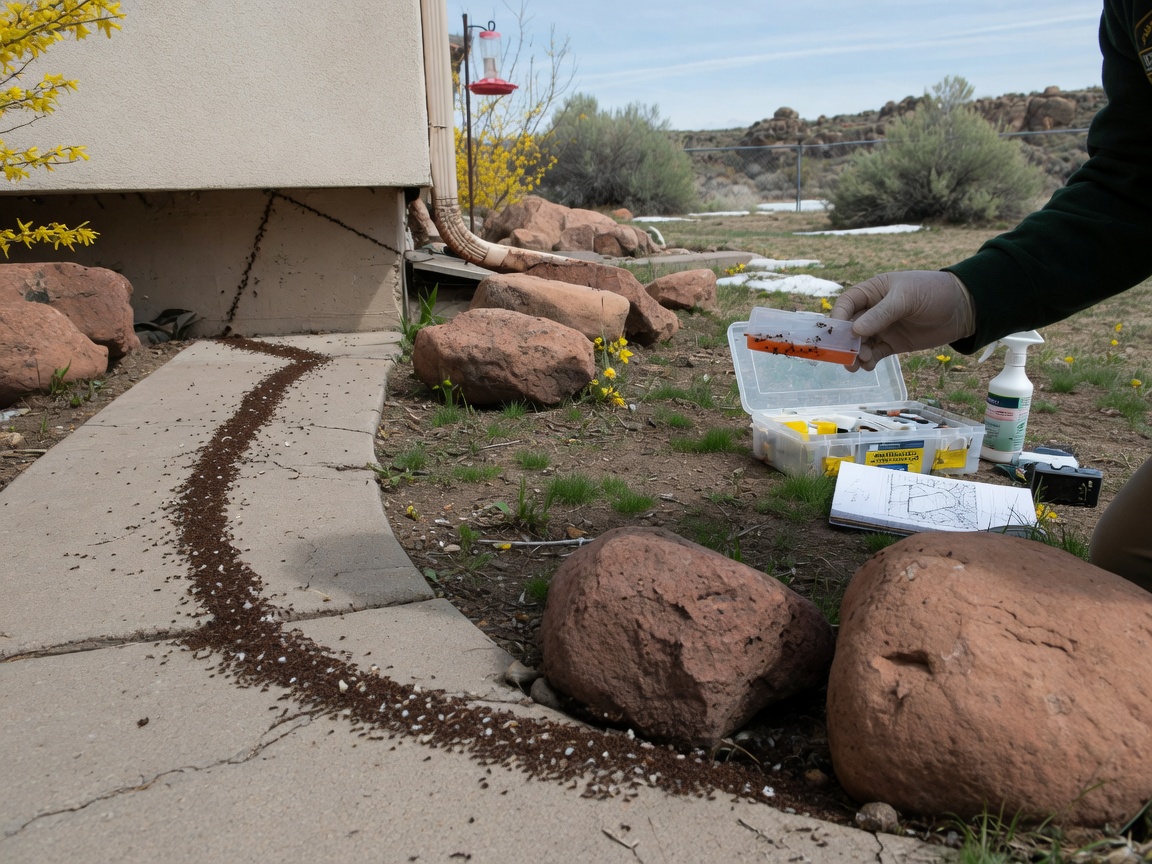
Ant trails appear in Rock Springs yards within the first warm weeks of spring once daytime temperatures rise above freezing in the high desert climate. Trails typically run along foundation edges, irrigation lines, and fence bases where moisture collects after low winter precipitation. Homeowners in North Rock Springs and South Rock Springs notice these lines first on south-facing exposures that thaw earliest.
Reading Trail Patterns on Local Terrain
High desert soils around Rock Springs stay dry most of the year, so ants concentrate foraging along any consistent moisture source once warm summer days begin. In White Mountain neighborhoods, trails often follow petroglyph-adjacent slopes where windblown debris creates thin organic layers ants can follow. Older housing stock near the Rock Springs Historical Museum tends to have settled foundations that create shallow gaps ants exploit after winter freeze-thaw cycles. Check sidewalks and driveways at dawn when traffic is lightest; active trails show steady two-way movement rather than scattered individuals. Note whether trails lead toward trees or shrubs common in Sweetwater County yards, as these provide the aphids and scale insects that supply honeydew. Mapping the full length of a trail before any treatment prevents missing secondary routes that reappear after the first warm spell.
Spring Conditions That Trigger Activity
Low precipitation means ants rely on household irrigation and roof runoff once warm summers arrive, concentrating trails near downspouts and garden beds in Green River and Evanston-adjacent properties. Cold winters delay colony growth until soil temperatures stabilize, so the first visible trails in Rock Springs usually appear in late April or early May rather than March. Wind patterns common to the area can scatter foraging ants, making trails look broken until evening when temperatures drop and activity resumes. Yards with compacted clay soils hold just enough spring moisture to support trail networks along fence lines, while sandy patches near White Mountain show shorter, more erratic lines. Residents who irrigate early in the morning often see trails shift toward those damp zones within days.
Practical Steps to Disrupt Trails
Remove visible food sources such as pet food bowls and fallen fruit before treating the trail itself. Sweep or vacuum the line daily for three to four days to break the pheromone path without chemicals. In South Rock Springs, where homes sit closer together, focus first on shared fence lines where ants cross from neighboring properties. Seal obvious entry points at the foundation with caulk rated for exterior use, paying special attention to utility penetrations common in 1970s-era housing stock. Avoid broad spraying that can scatter colonies into wall voids; instead place targeted baits along active sections and monitor for seven days. Reapply bait only where fresh traffic reappears, which is usually near irrigation valves or under shrubs that retain afternoon shade.
Connecting to Broader Yard Management
Ant trails often coincide with conditions that also affect other pests once warm summers settle in. Properties in North Rock Springs that already manage spider entry points may notice fewer ant trails after sealing the same gaps. The article What Local Wind and Dust Conditions Mean for Spider Control in Rock Springs explains how the same wind that scatters ants also pushes spiders toward foundations. Homeowners dealing with multiple trail networks benefit from reviewing How to Seal Entry Points Before Winter Rodents Arrive in Rock Springs for year-round exclusion practices that reduce spring ant pressure. When trails persist after consistent baiting and sealing, the Ant Exterminator page outlines inspection steps used on local properties.