
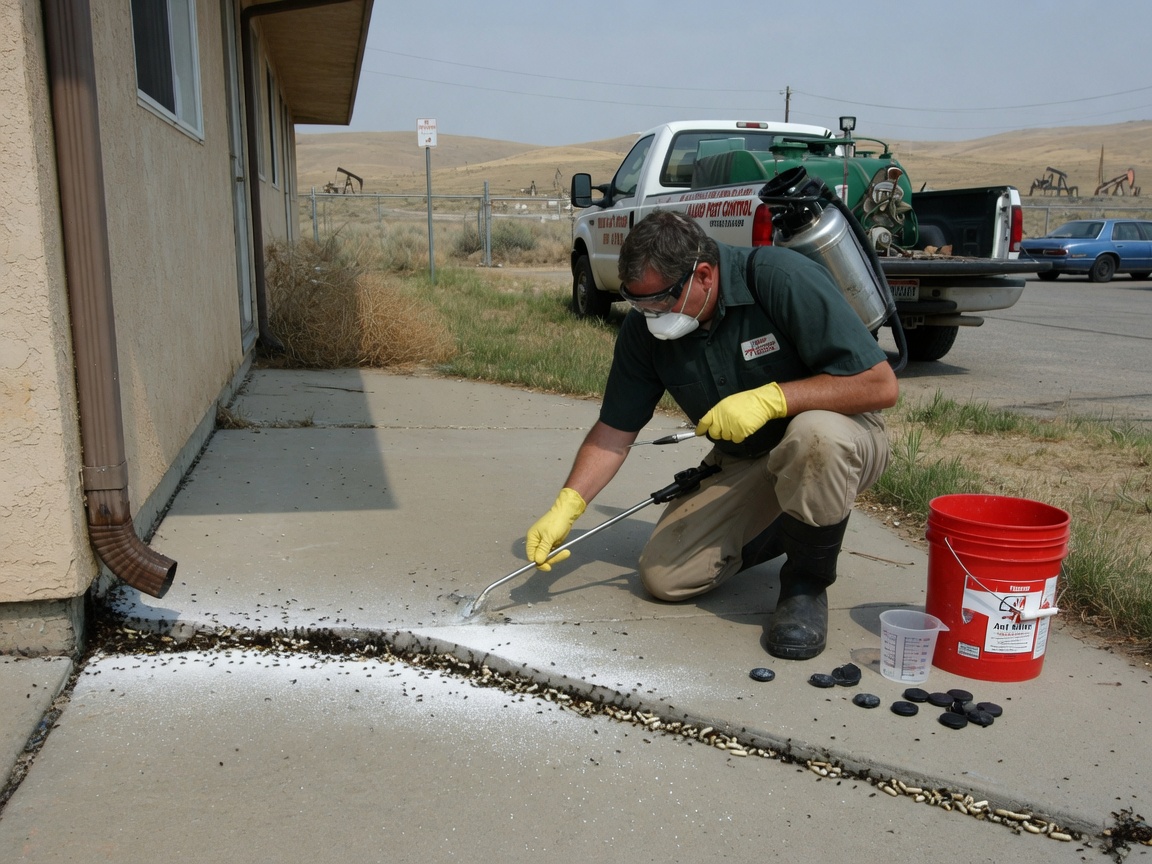
Rock Springs sits in Sweetwater County high desert where low precipitation and temperature swings shape ant behavior. Cold winters push pavement ants and carpenter ants from White Mountain terrain into crawl spaces and wall voids of older frame homes common in North Rock Springs. Treatments must account for dry soil that reduces bait uptake, so technicians use gel baits placed along foundation perimeters and interior baseboards rather than relying on liquid sprays alone.
Homes near the Rock Springs Historical Museum and Sweetwater County Historical Museum often date to the mid-1900s with stone foundations and settling cracks that create entry points. These structures require careful inspection of utility penetrations and attic insulation where colonies establish satellite nests. Over-application risks harming local wildlife near the White Mountain Petroglyphs, so targeted dusts and non-repellent residuals are preferred over broad barrier treatments.
Green River and Evanston residents occasionally call for the same service when colonies travel along irrigation ditches. The 24-hour availability at 2201 Foothills Blvd Ste 3A allows same-day response before foraging trails become established in kitchens and bathrooms during warm summer evenings.
Technician insight
In Rock Springs the thing that catches most people out with ant problems is how cold winters force colonies into the voids of pre-1980 homes along the White Mountain foothills where dry soil makes liquid treatments ineffective and only targeted baits placed inside the structure actually reach the nest.
White Mountain Split-Level
Homeowner noticed ants in the kitchen each evening after the first hard freeze. Inspection found a carpenter ant satellite colony inside insulation near a bathroom vent. Gel baits were placed along the trail and dust applied in the attic void; activity stopped within four days with no further signs after the follow-up visit.
Ant Exterminator Services We Offer
✓Pavement Ant Colony Treatment
Locates and eliminates pavement ant trails common along sidewalks and driveways in South Rock Springs using gel baits placed at entry points.
✓Carpenter Ant Inspection
Checks moisture-damaged wood in basements and attics of older North Rock Springs homes where carpenter ants excavate galleries during dry summers.
✓Foundation Perimeter Baiting
Applies weather-resistant bait stations around homes in White Mountain to intercept foraging ants before they reach living spaces.
✓Interior Void Dusting
Treats wall voids and electrical boxes in Sweetwater County properties with insecticidal dusts that reach hidden colonies without drilling.
✓Seasonal Re-Inspection
Returns after initial treatment to monitor activity in high-desert conditions where low moisture can delay colony elimination.
Ant Exterminator Cost in Rock Springs, WY
| Service | Typical Range | What Affects It |
|---|---|---|
| Initial Ant Inspection | $75–$125 | Waived when treatment is performed same day |
| Standard Single-Visit Treatment | $225–$350 | Most common for pavement ants in single-story homes |
| Carpenter Ant Multi-Visit Program | $400–$650 | Required when nests are inside walls or insulation |
| Seasonal Maintenance Visit | $150–$225 | Spring or fall check for properties with prior activity |
Ranges are typical for Rock Springs, WY and confirmed with an exact written quote before any work starts.
How it works
- 1
Site Assessment
Technician inspects foundation, crawl space and interior voids while noting construction age and nearby terrain features in the specific neighborhood.
- 2
Species Identification
Samples are examined on site to distinguish pavement ants from carpenter ants, which changes product selection for local conditions.
- 3
Targeted Application
Baits and dusts are placed at active trails and nest locations rather than broadcast spraying across the property.
- 4
Follow-Up Visit
Return within 7-14 days to verify reduction and adjust placements if colonies have shifted due to weather changes.
Pricing
Most ant jobs in Rock Springs fall between $225 and $550 depending on square footage, colony location and whether multiple visits are required.