
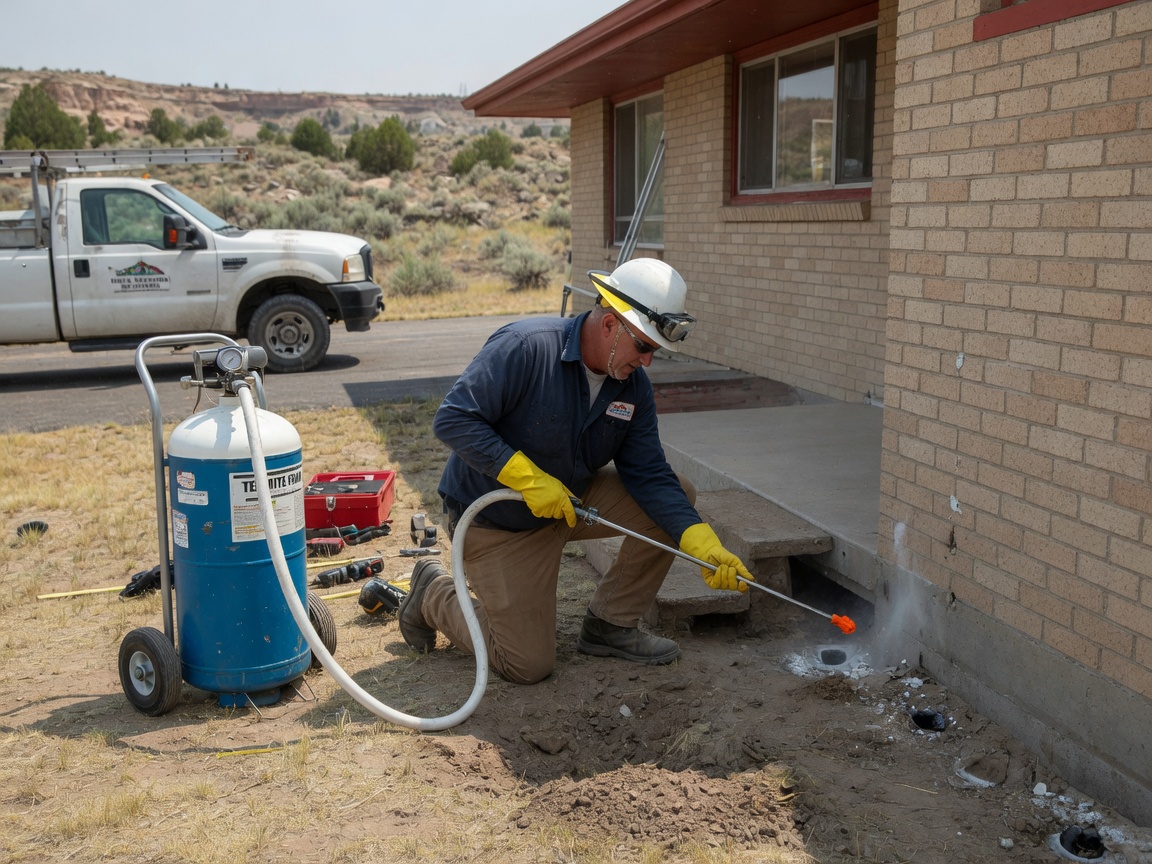
Rock Springs sits in a high desert climate where cold winters slow but do not eliminate subterranean termite activity. Older housing stock in North Rock Springs and South Rock Springs often features pier-and-beam construction with untreated wood in contact with soil, giving colonies easy entry points. Low precipitation keeps soil moisture low most of the year, so infestations concentrate around leaking pipes, irrigated lawns, and shaded north-facing foundations.
White Mountain properties built on rocky slopes face different challenges. Shallow soil and fractured bedrock make traditional trenching difficult, requiring careful drilling and foam application to reach galleries. Evanston and Green River homes share the same Sweetwater County soil profile, so we treat connected utility lines and shared fence lines to prevent cross-property movement during the short active season between spring thaw and early summer.
Liquid termiticides and bait stations are selected based on soil type rather than generic schedules. Cold temperatures can delay bait consumption for weeks, so we monitor stations through the first warm period instead of assuming quick colony elimination. Edge cases include termites traveling under concrete slabs in South Rock Springs garages where expansion joints have settled.
Technician insight
In Rock Springs the thing that catches most people out with termite work is assuming cold winters kill colonies outright. The short active window between thaw and summer heat means any delay in treatment lets them expand under slabs before the next inspection cycle. Older pier-and-beam homes in North Rock Springs with settled soil around the foundation are the most common surprise finds.
South Rock Springs garage slab
Homeowner noticed small mud tubes along the garage slab edge after spring thaw. Inspection revealed termites traveling from an irrigated lawn bed under the concrete to sill plates. We drilled the slab edge, applied non-repellent termiticide, and installed two bait stations on the lawn side. Follow-up in early summer showed no new activity.
Termite Exterminator Services We Offer
✓Subterranean Termite Treatment
Full perimeter soil application around foundations in North Rock Springs and South Rock Springs using non-repellent termiticides that transfer through the colony.
✓Crawl Space Inspection and Treatment
Detailed inspection of pier-and-beam homes followed by targeted wood and soil treatment where moisture from plumbing leaks supports activity.
✓Bait Station Installation
Placement of monitoring and bait stations around the exterior perimeter suited to the low-precipitation soil conditions common in Sweetwater County.
✓Slab Edge Treatment
Drilling and injection along garage and porch slabs in White Mountain homes where termites travel beneath concrete to reach framing.
✓Wood Treatment for Exposed Timbers
Direct application to sill plates and joists in older Rock Springs homes after confirming active galleries during cold-weather inspections.
Termite Exterminator Cost in Rock Springs, WY
| Service | Typical Range | What Affects It |
|---|---|---|
| Standard perimeter treatment | $450–$850 | Single-story homes with accessible crawl space in North or South Rock Springs |
| Bait station system | $600–$1,100 | Initial install plus first year of monitoring on larger lots near White Mountain |
| Slab injection add-on | $200–$450 | Garages or additions where drilling is needed |
| Annual monitoring visit | $150–$250 | Spring check after winter dormancy |
Ranges are typical for Rock Springs, WY and confirmed with an exact written quote before any work starts.
How it works
- 1
Initial Property Walk
We inspect the exterior foundation, crawl space access points, and any wood-to-soil contact on the specific lot in North Rock Springs, South Rock Springs or White Mountain.
- 2
Moisture And Entry Assessment
We locate irrigation lines, plumbing leaks, and expansion joints that allow termites to bypass dry soil typical of the high desert climate.
- 3
Treatment Selection
We choose between liquid barrier, bait stations, or combined methods based on construction type and observed activity level.
- 4
Application And Follow-Up
We apply the chosen treatment and schedule monitoring visits timed to the short warm season when termites are most active.
Pricing
Pricing depends on home size, construction type, and whether bait stations or liquid treatment is required.