
2026-09-17 · Cody Christensen
What Local Wind and Dust Conditions Mean for Spider Control in Rock Springs
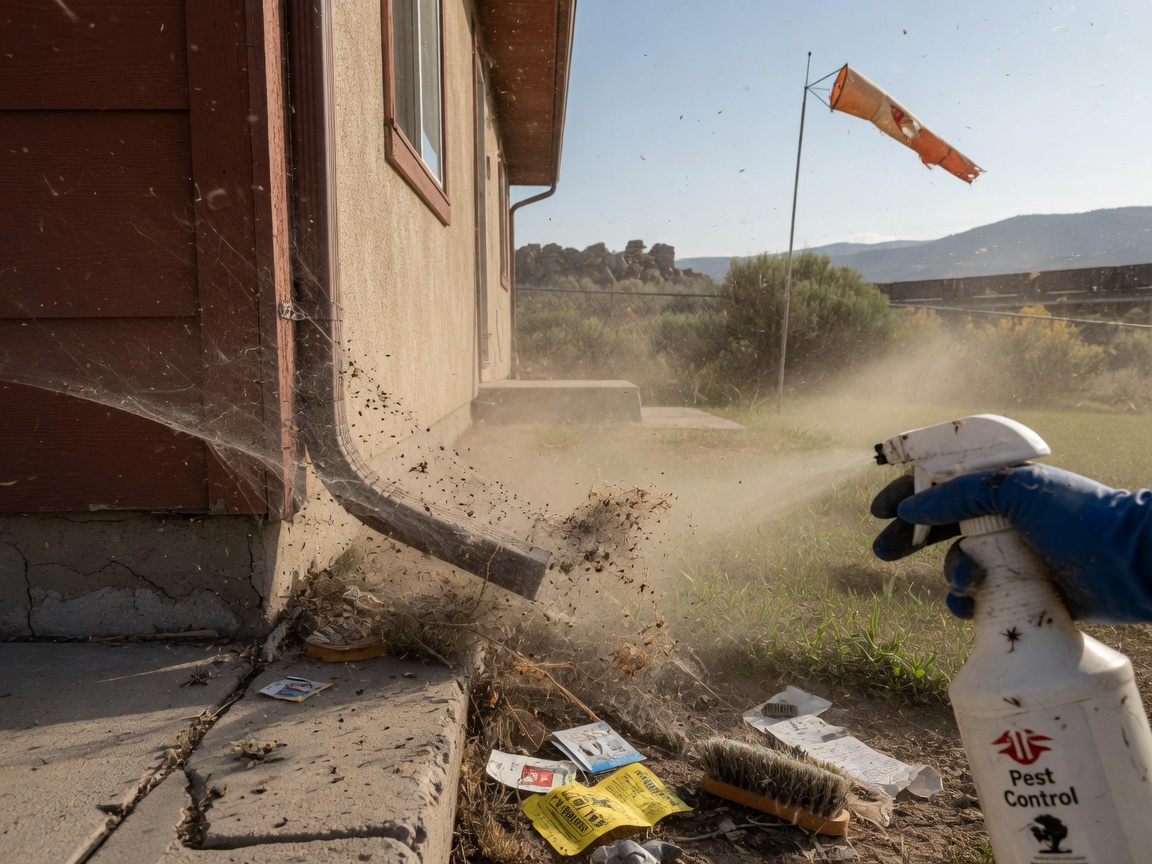
Rock Springs high-desert winds and blowing dust drive spiders indoors during spring and fall more than in calmer seasons, because gusts strip outdoor webs and push spiders toward protected corners in older housing stock common in Sweetwater County.
Wind Patterns That Move Spiders
Rock Springs sits in open high desert where afternoon winds often exceed 20 mph and carry fine dust across White Mountain and into North Rock Springs neighborhoods. These gusts tear down orb webs on fences and shrubs, forcing spiders such as hobo spiders and black widows to seek stable indoor sites behind siding, in crawl spaces, and around window frames. Homes built before 1980 in South Rock Springs frequently have more gaps at the foundation because settling soil and repeated freeze-thaw cycles widen cracks. Technicians see the highest indoor spider counts after three or more consecutive windy days when dust coats exterior surfaces and hides existing webs from homeowners. Sealing work must focus on south and west exposures that face prevailing winds rather than uniform treatment around the entire structure.
Dust Effects on Spider Signs and Treatment
Fine dust carried from the surrounding desert settles on webs and makes fresh activity harder to spot during inspections in White Mountain homes. Dust also reduces the effectiveness of residual sprays because particles coat treated surfaces within days and create a barrier that spiders walk over without picking up enough product. In low-precipitation periods typical here, dust remains airborne longer and infiltrates attics through ridge vents, giving spiders additional harborage near insulation. Control plans therefore include more frequent follow-up visits spaced 10 to 14 days apart instead of single applications. Technicians also adjust nozzle settings to reach under dusty ledges where spiders retreat after webs are destroyed outside.
Seasonal Timing Around Local Weather
Peak wind events align with warming trends in April and cooling in October, when spiders move most actively in Green River and Evanston corridors that share the same weather patterns. Cold winter nights below 20 degrees push surviving spiders deeper into wall voids, so exterior dust sealing done in late fall prevents re-entry when winds return. Summer monsoonal moisture is rare, so dust stays loose on the ground and continues to affect web stability through August. Scheduling quarterly checks in March, June, September, and November matches these cycles better than calendar-based treatments that ignore actual wind forecasts.
Homeowners in North Rock Springs can reduce pressure by trimming vegetation 18 inches from siding and clearing leaf litter that traps dust near foundations. For persistent indoor activity, targeted exclusion combined with crack-and-crevice applications inside produces longer results than perimeter sprays alone. See the full approach on our spider exterminator page for service details that fit these conditions.
Readers dealing with repeated intrusions after storms may also benefit from learning winter sealing methods described in How to Seal Entry Points Before Winter Rodents Arrive in Rock Springs. Properties in South Rock Springs facing open terrain experience the strongest effects and often need combined interior and exterior work.