
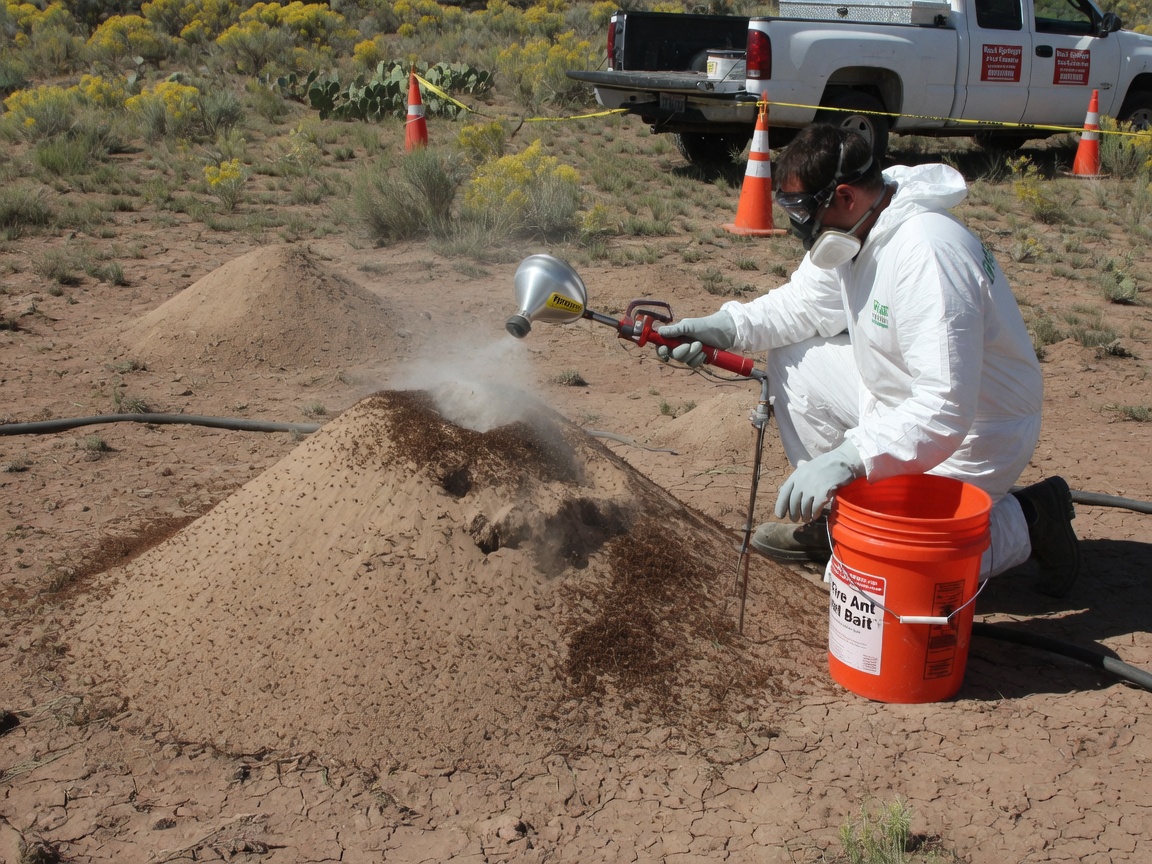
In Rock Springs high desert climate, fire ants often establish mounds near foundations where irrigation or runoff creates slightly moister soil pockets. Cold winters push colonies deeper, so surface treatments alone frequently miss active queens and require follow-up bait applications timed after warm summer evenings when foraging resumes. Properties in North Rock Springs with older crawlspaces and South Rock Springs lots near White Mountain slopes see repeated pressure because wind-blown debris collects against siding and creates protected entry points.
We use granular baits and targeted mound drenches that account for the low precipitation patterns here; water-based sprays evaporate quickly and lose effectiveness on exposed ground. Homeowners in White Mountain neighborhoods sometimes mistake harvester ant mounds for fire ant activity, leading to unnecessary treatments that fail to address the actual colony. Our approach includes inspecting utility trenches and pet areas where children or animals might disturb nests, reducing secondary stings that commonly occur on these dry, rocky lots.
Edge cases include colonies nesting under concrete slabs in Green River-adjacent homes or near the Rock Springs Historical Museum district where older landscaping retains heat. We avoid broad broadcast applications that could affect local wildlife corridors around the Sweetwater County Historical Museum area and instead focus on perimeter barriers that hold up through temperature swings between warm days and cool nights.
Technician insight
In Rock Springs the thing that catches most people out with fire ant control is assuming one surface treatment will finish the job when cold winters send colonies deeper under slabs or into wind-protected soil pockets around White Mountain homes. The dry high desert air also means baits need to be placed closer to actual foraging trails instead of broadcast across open ground that gets no moisture.
Hidden colony under driveway slab
A South Rock Springs homeowner noticed ants near the garage after warm weather returned. We found the main colony under the concrete slab where runoff collected. Targeted bait placement along the expansion joints eliminated the trail within two weeks without disturbing the surrounding rocky yard.
Fire Ant Control Services We Offer
✓Mound Inspection and Treatment
Locate and treat active fire ant mounds on residential lots in North Rock Springs and White Mountain using bait and drench methods suited to high desert soil.
✓Perimeter Barrier Application
Apply targeted barriers around foundations to block foraging trails common in South Rock Springs properties with rocky terrain and low moisture.
✓Colony Baiting Program
Deploy slow-acting baits that workers carry back to queens, effective during warm summer periods when ants forage more actively in Sweetwater County.
✓Slab and Foundation Treatment
Address colonies nesting under concrete in older Rock Springs homes where cold winters drive ants toward warmer protected spaces.
✓Yard Wide Monitoring
Quarterly checks for new mounds near irrigation lines and wind-sheltered spots typical around Evanston and Green River border properties.
Fire Ant Control Cost in Rock Springs, WY
| Service | Typical Range | What Affects It |
|---|---|---|
| Single mound treatment | $125–$225 | Smaller yards with isolated mounds in South Rock Springs |
| Full yard initial service | $275–$475 | Larger lots in North Rock Springs or White Mountain with multiple colonies |
| Follow-up visit | $100–$175 | Required when cold weather drives colonies deeper |
| Quarterly monitoring program | $350–$550 | Covers warm summer season in Sweetwater County |
Ranges are typical for Rock Springs, WY and confirmed with an exact written quote before any work starts.
How it works
- 1
Site Assessment
Walk the property to map visible mounds and foraging trails while noting soil conditions and nearby water sources in Rock Springs neighborhoods.
- 2
Targeted Application
Apply baits and drenches directly to active sites, avoiding broad spraying that evaporates fast in the dry local climate.
- 3
Follow-Up Inspection
Return after 7-10 days to check for surviving activity and adjust treatment based on seasonal temperature changes.
- 4
Prevention Recommendations
Advise on sealing entry points and managing yard debris that collects against structures in windy high desert conditions.
Pricing
Pricing depends on yard size, number of mounds, and whether multiple visits are needed due to seasonal colony depth.